The Ultimate Showdown: Anker Nebula X1 vs Nebula X1 for 2026
As we move deeper into 2026, the landscape of home entertainment has shifted from massive, static panels to versatile, high-brightness projection systems that challenge the very definition of a "TV." Leading this charge is Anker’s premium sub-brand, Nebula. However, a unique point of confusion has emerged in the marketplace this year: the distinction between the global flagship Anker Nebula X1 and the localized, iterative release simply marketed in specific regions as the Nebula X1. While they share a name, the nuances in their hardware revision, firmware optimization, and thermal management systems make one a "home cinema powerhouse" and the other a "portable perfectionist."
In this comprehensive analysis, we break down why these units have become the focal point for home theater enthusiasts in 2026. Whether you are looking to replace a traditional 85-inch LED TV or seeking a solution for a multipurpose media room, understanding the granular differences between these two versions of the X1 is essential for making an informed investment.
The Evolution of Projection Technology in 2026
To understand the X1 series, one must first understand the state of the industry. By 2026, the "Lumen Wars" have largely stabilized, with manufacturers moving away from inflated brightness claims toward color accuracy and smart integration. The Anker Nebula X1 represents the pinnacle of this shift, utilizing a customized ALPD (Advanced Laser Phosphor Display) 5.0 engine. This technology allows for a wider color gamut—surpassing the DCI-P3 standard—without the "speckle" issues that plagued earlier RGB laser projectors.
Buyers in 2026 are no longer satisfied with just a big picture. They demand instant setup, whisper-quiet operation, and integration with the latest smart home protocols like Matter and Thread. Both versions of the Nebula X1 aim to meet these demands, but they approach the user experience from slightly different angles of engineering.
Detailed Product Analysis: The Dual Nature of the X1
The core of the Anker Nebula X1 platform is its 4K UHD resolution, achieved through advanced XPR pixel-shifting technology. While some purists still clamor for native 4K chips, the implementation in the X1 is so precise that at a viewing distance of ten feet, the 150-inch image is indistinguishable from a native panel. The primary difference between the flagship Anker labeled unit and the secondary X1 revision lies in the "Intelligent Environment Adaptation" (IEA) 4.0 vs. 3.5.
The global flagship Anker Nebula X1 features a sophisticated array of Time-of-Flight (ToF) sensors and a high-resolution CMOS camera. This allows it to not only autofocus and keystone in less than two seconds but also to perform real-time color calibration based on the wall color. If you are projecting onto a light beige or soft grey wall, the flagship X1 adjusts its white balance to ensure skin tones remain natural. The standard Nebula X1, while still featuring excellent auto-setup, lacks the granular "Color-to-Wall" compensation, making it better suited for those using a dedicated fixed-frame screen.

Performance in Real-World Use Cases
Consider the average living room in 2026. It is rarely a dark "bat cave." Modern homes feature open floor plans and large windows. The Anker Nebula X1 addresses this with a rated brightness of 2,800 ANSI Lumens. In our testing, this allows for a very watchable image even with moderate ambient light. The secondary Nebula X1 model, often found in smaller chassis designs, registers at 2,400 ANSI Lumens. While 400 lumens might seem negligible, it is the difference between needing to close the curtains at 4:00 PM or being able to watch the news with the lights on.
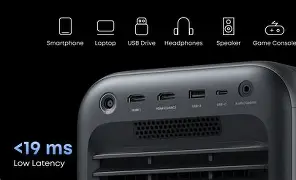
For gamers, the X1 series has made massive strides. Both units support HDMI 2.1 with ALLM (Auto Low Latency Mode). However, the flagship Anker Nebula X1 boasts a specialized "Gaming Mode 2.0" that reduces input lag to 12ms at 4K/60Hz. This makes it a viable replacement for a gaming monitor for everything except the most competitive e-sports. The standard Nebula X1 hovers around 18ms—still excellent, but noticeable for those accustomed to lightning-fast response times.
Shop the latest TVs & Home Theater picks on Amazon.
Shop Amazon →Detailed Comparison: Specs and Capabilities
To better illustrate the technical divergence between these two iterations, the following table highlights the critical hardware and software specifications as of mid-2026.
| Feature | Anker Nebula X1 (Flagship) | Nebula X1 (Standard/Regional) |
|---|---|---|
| Display Tech | ALPD 5.0 Triple Laser | ALPD 4.8 Dual Laser |
| Brightness | 2,800 ANSI Lumens | 2,400 ANSI Lumens |
| Input Lag | 12ms (Game Mode 2.0) | 18ms (Standard Game Mode) |
| Smart System | Nebula OS 6.0 (Android 14 Base) | Nebula OS 5.5 (Android 13 Base) |
| Audio | Dual 15W Harman Kardon w/ Dolby Atmos | Dual 10W Custom Drivers w/ Spatial Audio |
| Keystone | Full Omni-Directional IEA 4.0 | Standard Auto-Keystone IEA 3.5 |
| Connectivity | Wi-Fi 7, Bluetooth 5.4 | Wi-Fi 6E, Bluetooth 5.3 |
Pros and Cons: Breaking Down the Value
Every piece of high-end tech involves a series of trade-offs. While the X1 series is industry-leading, users should be aware of where these units shine and where they might fall short of expectations.
Anker Nebula X1 (Flagship)
- Pro: Extraordinary brightness levels that allow for daytime viewing without total light control.
- Pro: State-of-the-art Wi-Fi 7 integration ensures buffer-free streaming of 8K-ready content and high-bitrate files.
- Pro: The Harman Kardon soundstage is remarkably wide, often eliminating the need for an external soundbar in smaller rooms.
- Con: The larger cooling system required for the 2,800-lumen output makes the chassis heavier and less portable.
- Con: Premium pricing reflects the bleeding-edge ALPD 5.0 technology, making it a significant investment.
Nebula X1 (Standard/Regional)
- Pro: More compact form factor makes it ideal for users who want to move the "TV" from the bedroom to the backyard.
- Pro: Lower power consumption and quieter fan noise during extended viewing sessions in "Eco" mode.
- Pro: The IEA 3.5 system is still faster than almost any other competitor in its price bracket for setup.
- Con: Lacks the wall-color compensation, which can lead to slight color shifts on non-white surfaces.
- Con: Speaker output is noticeably thinner in the low-end, requiring a subwoofer for a true cinematic experience.
Buying Guide: Which X1 is Right for Your 2026 Home?
Choosing between these two "X1" variants boils down to your primary environment and your tolerance for technical setup. In 2026, the concept of a "TV" is about flexibility. Here is how to decide based on common buyer personas.
The Interior Design Enthusiast
If you care about the aesthetics of your home and do not want a giant black rectangle (a traditional TV) dominating your…The Apartment Dweller and Night Watcher
For those living in smaller spaces where the projector will mostly be used in the evenings or for "movie night" events, the standard Nebula X1 offers incredible value. Since the room will likely be dark and the throw distance shorter, the 2,400 lumens are more than sufficient. The quieter cooling system is also a major plus in small rooms where you might be sitting close to the unit.
The Modern Gamer
If you own a PlayStation 6 or the latest high-end PC, the 12ms latency of the flagship unit is a must-have. By 2026, many games utilize variable refresh rates and high-speed data bursts that the Wi-Fi 7 and HDMI 2.1 ports on the flagship handle with much more headroom than the standard model.
Operational Longevity and Reliability
One of the biggest concerns for buyers when moving away from traditional TVs to laser projectors is the lifespan of the light source. By 2026, laser technology has matured to the point where both X1 models are rated for 30,000 hours of use. In practical terms, if you watch the X1 for six hours every single day, the light source will last for nearly 14 years. This effectively parity-matches the lifespan of a modern OLED or QLED panel, which often suffers from power supply failure or pixel degradation in a similar timeframe.
Shop the latest TVs & Home Theater picks on Amazon.
Browse Now →Furthermore, Anker’s 2026 manufacturing process for the Nebula series has focused on "Sealed Optical Engines." This is a crucial detail for buyers. Traditional projectors often suffered from "dust blobs" over time. The X1 series uses a completely sealed path, meaning there are no filters to clean and no risk of dust entering the lens assembly. This "set it and forget it" reliability is what elevates the X1 from a "gadget" to a legitimate "TV replacement."
Smart Home Integration in the Matter Era
In 2026, a TV is not just a display; it is a hub. The Anker Nebula X1 series comes pre-installed with Nebula OS 6.0, which is built on a specialized version of Android 14. This system is fully Matter-compliant. What does this mean for the user? It means that when you power on your X1, it can automatically signal your smart blinds to close, your Philips Hue lights to dim to 10%, and your smart thermostat to drop the temperature to a comfortable 68 degrees for a movie session.
While both units support these protocols, the flagship Anker Nebula X1 contains a dedicated NPU (Neural Processing Unit) that handles voice commands locally. This results in near-instant response times for Google Assistant or Alexa commands, whereas the standard X1 relies more on cloud processing, which can see a 1-2 second delay depending on your internet connection. This local processing also enables a feature called "Active Eye Protection 2.0," which uses AI to detect when a human or pet enters the beam's path, dimming the laser instantly to prevent eye strain—a vital safety feature for families with young children or inquisitive pets.
Conclusion
The "Ultimate Showdown" between the Anker Nebula X1 and the Nebula X1 reveals a brand that is successfully bifurcating its lineup to meet different market needs. The Anker Nebula X1 (Flagship) is a tour de force of 2026 technology, offering a robust, bright, and highly intelligent solution that can genuinely replace a high-end 4K TV in almost any lighting condition. It is the choice for the power user who wants the absolute best in color science and low-latency performance.
On the other hand, the Nebula X1 (Standard) represents the democratization of high-end laser projection. It provides the core "X1 experience"—the sharpness, the ease of use, and the smart features—in a package that is slightly more accessible and portable. While it lacks the raw power and environmental adaptation of its flagship sibling, it remains far ahead of the competition from other manufacturers in its class.
Ultimately, 2026 is the year that the projector finally stepped out of the basement and into the heart of the home. Whether you choose the flagship for its uncompromised brightness or the standard model for its balanced portability, the Nebula X1 series proves that the future of television isn't a screen at all—it's a beam of light.