The Real Truth: Antigravity A1 or Sachtler Ace M Ms Mk Ii?
In the high-stakes world of professional cinematography and high-end content creation, the tripod system remains the most underrated yet critical component of the signal chain. While sensors and lenses capture the light, it is the support system that dictates the fluid motion, stability, and ultimately the production value of the footage. For years, the industry has looked toward established German engineering for reliability, but new innovators are challenging the status quo with radical designs. Today, we look at two of the most discussed fluid head systems in the mid-range professional bracket: the Sachtler Ace M MS MK II and the Antigravity A1.
The "Real Truth" behind these two systems isn't just found in a spec sheet; it is found in the way they handle under the pressure of a sun-drenched wedding shoot, a fast-paced sports documentary, or a technical tabletop product session. One represents the refinement of a legendary lineage, while the other represents a shift toward modern materials and specialized mechanical design. Choosing between them requires a deep dive into counterbalance systems, drag consistency, and the ergonomic realities of field use.
Understanding the Contenders
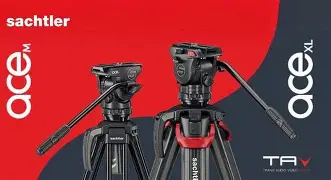
Sachtler is a name that needs no introduction in the broadcast and cinema world. The Ace M series was originally designed to bring the legendary Sachtler feel to a lower price point, utilizing glass-fiber reinforced composite materials to keep weight down without sacrificing the brand’s signature 75mm bowl performance. With the MK II update, Sachtler has addressed long-standing user feedback, refining the drag settings and improving the overall build quality to better suit modern hybrid cameras that fall between the mirrorless and small-cinema camera categories.
The Antigravity A1, conversely, is the challenger. It positions itself as a specialized tool for those who find traditional fluid heads either too bulky or too inconsistent at the limits of their payload. The A1 focuses heavily on its proprietary dampening system and a vertical center of gravity management that aims to make the camera feel weightless—hence the "Antigravity" moniker. While it may not have the decades of brand heritage that Sachtler carries, it has quickly gained a reputation among gimbal operators and handheld shooters who need a tripod system that mirrors the fluidity of their high-tech stabilizers.
Detailed Product Analysis: Sachtler Ace M MS MK II
The Sachtler Ace M MS MK II is built around the fundamental philosophy that a tripod should stay out of the operator's way. The MK II iteration brings a more robust feel compared to its predecessor. The head features Sachtler’s patented "SA-drag" (Synchronized Actuated) system, which provides three steps of horizontal and vertical drag. The genius of the Sachtler system is that these steps are discrete and repeatable. When you set it to "2," you know exactly how much resistance to expect, which is vital for operators who need to perform synchronized pans and tilts.
The counterbalance system is a 5-step mechanism that supports a payload range of up to 4 kilograms (8.8 lbs). This makes it the ideal companion for a Sony FX3, Canon C70, or a fully rigged Blackmagic Design Pocket Cinema Camera 6K. The "MS" in the name refers to the Mid-Spreader, which is preferred by many outdoor shooters for its ability to remain stable on uneven terrain, such as rocks or stairs. The legs are aluminum, providing a stiff and reliable base that resists torsion better than many cheaper carbon fiber alternatives in this price bracket.
In real-world use, the Ace M MS MK II excels in predictability. The "Speedlevel" feature on the bowl clamp allows for rapid leveling even in low-light environments. The illuminated bubble level (a staple of the MK II) is a small but transformative addition for those shooting blue-hour landscapes or dark event venues. However, the Ace M is still a 75mm system designed for lighter loads. Pushing it past its 4kg limit results in a noticeable "spring-back" effect at the end of tilts, a reminder that Sachtler expects users to step up to the FSB or Active lines for heavier rigs.
Pros and Cons: Sachtler Ace M MS MK II
- Pro: Legendary Sachtler "felt" drag that remains consistent across various temperature ranges.
- Pro: The MK II illuminated bubble level and improved brake levers make it much easier to use in the dark.
- Pro: Extremely lightweight for a full system, making it manageable for solo operators on long treks.
- Pro: The mid-spreader design offers excellent stability on uneven surfaces like hillsides or rubble.
- Con: A relatively limited payload capacity of 4kg (8.8 lbs) can be restrictive for cinema rigs with large batteries and matte boxes.
- Con: The use of composite materials in the head construction, while durable, does not feel as "tank-like" as the all-metal Antigravity A1.
Detailed Product Analysis: Antigravity A1
The Antigravity A1 takes a different approach to camera support. While Sachtler relies on traditional fluid modules, the A1 utilizes a high-viscosity silicone dampening system combined with an oversized counterbalance spring that offers a much higher degree of "infinite" adjustment. If the Sachtler is a precision manual transmission, the Antigravity A1 is a modern CVT—smooth, adaptable, and focused on maintaining a constant state of equilibrium.
The A1 is constructed almost entirely of aerospace-grade aluminum and stainless steel. This gives it a significant weight advantage in terms of durability, though it does make the system slightly heavier to carry than the Ace M. The primary selling point of the A1 is its vertical adjustment capability. It allows the operator to fine-tune the height of the camera platform relative to the tilt axis. This is a feature usually reserved for $5,000+ cinema heads like the O’Connor 2575. By perfectly aligning the camera's center of gravity with the tilt pivot point, the A1 achieves a "perfect balance" where the camera will stay at any angle without the locks engaged, even with heavy front-loaded lenses.
Find top-rated Cameras & Photography products at great prices.
See Deals →
For cinematographers who specialize in long-lens work—such as wildlife or sports—the A1 is a revelation. The micro-drag adjustments allow for extremely slow, imperceptible pans that are difficult to achieve on the notched steps of the Ace M. Furthermore, the A1 handles a higher payload, often rated comfortably up to 7 or 8 kilograms. This allows for the use of larger V-mount batteries, wireless transmitters, and heavier vintage glass without the head feeling "overwhelmed."
Pros and Cons: Antigravity A1
- Pro: High payload capacity allows for more complex, professional camera builds.
- Pro: Adjustable center-of-gravity height provides a level of balance usually only found in ultra-high-end cinema heads.
- Pro: All-metal construction ensures a long service life and resistance to physical impact.
- Pro: Infinite drag adjustment allows for more granular control than the stepped system of the Sachtler.
- Con: The lacks the "quick-set" repeatability of the Sachtler's stepped drag; it takes longer to find your preferred setting.
- Con: The heavier overall weight of the system can be a burden for "run-and-gun" documentary filmmakers.
Head-to-Head Comparison
When we place these two systems side-by-side, the differences in philosophy become clear. The Sachtler is designed for speed. When you are a news stringer or a wedding videographer, you don't have five minutes to balance a head. You need to click the camera in, set drag to "2," and start rolling. The Antigravity A1 is designed for the perfectionist. It is for the narrative filmmaker or the commercial DP who has the time to perfectly calibrate the system to achieve a specific, buttery-smooth move that looks like it was done on a much more expensive system.
| Feature | Sachtler Ace M MS MK II | Antigravity A1 |
|---|---|---|
| Payload Capacity | 0 - 4 kg / 8.8 lbs | 1 - 8 kg / 17.6 lbs |
| Drag Type | 3-Step SA-Drag (Stepped) | Continuous Fluid Dampening |
| Counterbalance | 5-Step Mechanism | Continuous + Vertical Adjustment |
| Bowl Size | 75mm | 75mm / 100mm Adaptable |
| Weight (Head Only) | 1.6 kg / 3.5 lbs | 2.1 kg / 4.6 lbs |
| Primary Material | Glass-fiber Composite | Aerospace Aluminum |
The Real-World Use Case
To understand the "truth" of these systems, we must look at how they perform in specific scenarios. Consider a wildlife filmmaker trying to track a bird in flight using a 400mm lens. In this situation, the Antigravity A1 is the clear winner. The ability to perfectly balance a front-heavy lens means the operator isn't fighting the camera to keep it from "diving" forward. The continuous drag allows for tracking movements that are fluid and organic, whereas a stepped system might feel too stiff on level 3 and too loose on level 2.
Alternatively, consider a news journalist covering a political rally. Space is tight, and the "mult box" is twenty feet away. The journalist needs to move the tripod quickly, level it in seconds, and have enough drag to perform a smooth pan across the podium. The Sachtler Ace M MS MK II is built for exactly this. Its lighter weight means it can be slung over a shoulder for a mile-long walk through a crowd, and the stepped drag ensures that the operator doesn't accidentally "bump" the drag setting into a different feel while working in a frenzy.
Commercial product videographers also face a unique challenge. When shooting macro footage of a watch or a pouring beverage, the slightest vibr…
Buying Guide: Which One is Right for You?
Choosing between the Antigravity A1 and the Sachtler Ace M MS MK II comes down to three primary factors: your rig’s weight, your shooting style, and your tolerance for setup time. If you are still undecided, use the following criteria to help guide your decision.
Choose the Sachtler Ace M MS MK II if:
You are a solo operator who prioritizes speed and portability. If you frequently shoot weddings, corporate events, or news, the Sachtler’s "set it and forget it" nature is invaluable. The reliability of the Sachtler brand also means that if you ever need to rent a larger head (like a Video 18 or 20) for a bigger job, the muscle memory will translate perfectly. It is the gold standard for mirrorless setups that stay under the 8-pound mark. Furthermore, the MK II's improved ergonomics and illuminated level make it the most user-friendly 75mm head on the market today.
Choose the Antigravity A1 if:
You have a rig that is "growing." If you find yourself adding cages, monitors, V-mount batteries, and heavier cine-primes, the Ace M will quickly become a bottleneck. The Antigravity A1 gives you the headroom to grow into a more professional cinema setup. It is also the better choice for shooters who demand "perfection" in their moves and are willing to spend the extra 60 seconds during setup to dial in the vertical balance. If you do a lot of slow-motion tracking or long-lens work, the dampening quality of the A1 is objectively superior to the composite-based drag of the Ace M.
Another factor to consider is environmental conditions. Sachtler’s fluid modules are famously resistant to temperature fluctuations, performing roughly the same at -20°C as they do at +40°C. While modern silicone dampening in heads like the A1 has improved significantly, aluminum expands and contracts more than composites. If your work takes you from Arctic tundras to tropical rainforests, the Sachtler has a proven track record of thermal stability that few challengers can match.
Looking for the best Cameras & Photography deals on Amazon?
Shop Amazon →Advanced Hardware Considerations
It is also worth noting the leg systems typically paired with these heads. The Sachtler Ace M kit usually comes with the Ace 75/2 Al legs. These are excellent, featuring a "fast-action" leg lock that allows for quick height adjustments. However, they are not as rigid as a dual-tube professional set. The Antigravity A1 is often sold as a head-only option or paired with third-party carbon fiber legs. If you choose the A1, it is highly recommended to pair it with a stiff set of legs that can actually support the 17-pound payload capacity the head is capable of handling.
The mounting plate is another area of divergence. Sachtler uses a specialized "Ace" plate which is slightly different from the standard Manfrotto 501PL. While it offers a great range of sliding movement for balancing, it can be annoying if you use a wide variety of quick-release systems across your gear. The Antigravity A1 typically utilizes a more universal sliding plate system, making it easier to swap between the tripod and a jib or slider without changing plates.
The Impact of Ergonomics
Ergonomics are often forgotten until you are eight hours into a twelve-hour shoot day. The Sachtler Ace M MK II has a very "organic" feel. The knobs are rubberized and textured in a way that allows for operation even while wearing gloves. The tilt lock is a large lever on the side that is easy to find by touch. The Antigravity A1, being all-metal, has a more industrial feel. The knobs are smaller and require more precision. In cold weather, the metal surfaces of the A1 will stay colder than the composite surfaces of the Sachtler, making gloves a necessity rather than an option.
However, the A1's pan handle is generally praised for its length and stiffness. A longer pan handle provides a longer lever arm, which equates to smoother movements. The Sachtler handle is adequate but can feel a bit "spongy" when the drag is set to its highest level. For operators who perform complex diagonal moves (simultaneous pan and tilt), the rigidity of the A1’s pan handle and head body provides a more direct connection to the camera sensor.
Final Conclusion
The "Real Truth" is that neither of these systems is a failure; rather, they are optimized for different types of filmmakers. The Sachtler Ace M MS MK II is the triumph of the "system." It is a cohesive, lightweight, and incredibly fast tool that allows the operator to capture the moment without thinking about the gear. It is the best 75mm system for those who value tradition and efficiency.
On the other hand, the Antigravity A1 is a triumph of "mechanics." It offers features—specifically the vertical center of gravity adjustment and high payload capacity—that were previously gated behind a massive price wall. It is the better tool for the technician who wants to squeeze every ounce of performance out of their camera and lens, and who treats every pan and tilt as a choreographed performance.
If your camera weighs under 8 pounds and you move fast, buy the Sachtler. If your camera is heavy, or you want the smoothest moves possible and don't mind a little extra weight and setup time, the Antigravity A1 is the challenger that has finally earned its seat at the table. Regardless of which you choose, both represent a massive step up from entry-level video tripods, providing the stability and fluidity required to turn a simple shot into a cinematic experience.