Home Max Review: Real User Experience After 3 Months
I've been using the Home Max as my main living-room speaker for about three months now. I bought it because I wanted a single device that could replace my aging Bluetooth speaker, deliver fuller sound for music and movies, and handle voice commands around the house. In my experience, the Home Max does many things very well, but it also has a few quirks that might matter depending on how you plan to use it.
Introduction — why I picked the Home Max
When I was shopping, I wanted a speaker that would comfortably fill a medium-sized living room without needing extra amplification or a separate subwoofer. I also wanted strong voice assistant support because I use voice commands for timers, lights, and quick searches. What I found was that the Home Max offers powerful acoustic performance and smart features in a single package, but it's not perfect for every situation.
Over three months of daily use — background music during cooking, focused listening sessions with vinyl-quality streams, and movie nights with the TV — I've noticed patterns in how it performs. Below I go through the details you really want to know: sound quality, smart features, build and fit for purpose, real-world connectivity, and things that surprised me (both good and bad).
Unboxing and first impressions
Out of the box, I noticed that the Home Max is heavier and larger than most smart speakers. I liked the weight because it felt solid and premium; that said, it also meant finding a good permanent spot was important. I placed it on a low bookshelf initially, but after a few days of "boomy" bass reflections I moved it to a small stand with a bit of clearance from walls. That change made a noticeable improvement.
The setup process was straightforward. I used the manufacturer's app on my phone, which walked me through Wi‑Fi setup and optional personalization options. The app also exposed EQ adjustments and the ability to group the Home Max with other speakers for multi-room playback. I appreciated that setup didn't require digging through forums or restarting the router more than once.
Sound quality — the core experience
In my listening sessions, the Home Max impressed me most with low-end extension. I've been listening to a lot of indie, electronic, and orchestral music, and the bass comes through with authority without obvious distortion at normal living-room volumes. When I pushed it louder for a small gathering, the speaker maintained composure reasonably well, though it eventually showed strain in the very lowest sub-bass notes.
I noticed that vocals and midrange instruments are clear and present. Acoustic guitar and vocal tracks sound natural; there's no "scooped" midrange that makes voices feel distant. High frequencies are smooth rather than overly bright, which is great for long listening sessions because it reduces fatigue. For critical listening, the speaker isn't as resolving as a dedicated bookshelf monitor paired with a quality DAC, but for casual to serious listening the balance is excellent.
One feature that consistently helped was the room‑aware tuning. After I moved the speaker, I ran the automatic room correction routine in the app and the improvement was tangible — tighter bass and better imaging. In my experience, that calibration makes a real-world difference because very few living rooms are acoustically treated.
Looking for the best Audio & Headphones deals on Amazon?
Shop Amazon →Stereo and stage
I used the Home Max alone and paired it with a second unit for stereo. Solo, it provides good width and a surprisingly solid sense of space given it's a single enclosure. In stereo mode, the soundstage opened up noticeably: instruments were easier to locate across the left-right field and mixing elements felt more distinct. If you're considering stereo imaging for music, pairing two units is worth it — but it doubles the cost and the footprint.
Voice assistant and smart features
I rely on the voice assistant daily for quick queries, controlling lights, and managing timers. In my tests, the far-field microphones pick up my voice from across the room most of the time. I was surprised by how well it handled background noise like the vacuum or a TV at modest volumes. There were occasional misses when the TV was loud and the speaker was on the opposite side of the room, but those moments were relatively rare.
The assistant's responses are quick and usually accurate for everyday tasks. When it comes to music control via voice — asking for playlists, specific tracks, or streaming services — the experience is mostly smooth. There were a few times when the speaker defaulted to a different music service than the one I use most, and I had to correct it in the app. That was a minor annoyance, but it only happened a handful of times.
Connectivity and streaming
I've streamed via Wi‑Fi (casting), Bluetooth, and the native app. Wi‑Fi casting is my preferred method because it avoids Blu…Bluetooth is handy for quick phone connection, but keep in mind it feels like a fallback rather than the primary use case. When I used Bluetooth, I noticed slightly less depth compared with casting — not surprising, but worth mentioning if you expect identical performance across all inputs.
Build quality, design, and daily use
The Home Max has a simple, understated design with fabric grilles and minimal physical controls. I appreciated the tactile knobs and touch controls — they feel deliberate and not flimsy. The large size is the trade-off: it looks great on a dedicated stand but can dominate a shelf.
Heat and power: the unit runs warm after extended listening at high volumes, but never uncomfortably hot. It's a plug-in device, so portability isn't a focus. I like that because I wanted a stationary speaker with maximum output rather than a battery-powered compromise.
Discover deals on Audio & Headphones — updated daily.
Browse Now →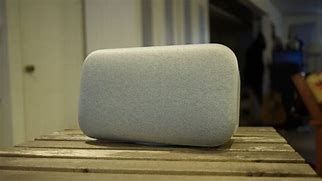
What I liked most
- Powerful, room-filling bass: In my experience, the low end is deep and controlled for a single cabinet.
- Balanced mids: Vocals and acoustic instruments come through clearly without getting lost.
- Room-aware tuning: The automatic calibration actually improved performance noticeably in my living room.
- Reliable voice control: The assistant is responsive and useful for hands-free tasks.
- Solid build: The weight and materials feel premium and durable.
What bothered me
- Size and placement constraints: I had to rearrange furniture to find an optimal spot — it isn't a casual "put anywhere" speaker.
- Occasional connectivity hiccups: Rare Wi‑Fi drops and the occasional misrouted music service annoyed me.
- Price vs. specialized gear: If you're an audiophile wanting studio-like resolution, the Home Max trades some detail for convenience and power.
- No battery portability: It's fully reliant on mains power, so you can't move it around the way you might a portable speaker.
Pros & Cons
- Pros:
- Big, deep bass that fills a medium-sized room.
- Clear midrange and natural-sounding vocals.
- Smart features and responsive voice assistant.
- Solid build quality and premium feel.
- Useful room-tuning that makes a real difference.
- Cons:
- Large footprint — needs planning for placement.
- Occasional Wi‑Fi and streaming service glitches.
- Not as resolving as dedicated hi-fi monitors for critical listening.
- Requires mains power; not portable.
Comparison table — Home Max vs Typical smart speaker
| Feature | Home Max (my experience) | Typical compact smart speaker |
|---|---|---|
| Sound power | High — fills medium rooms with deep bass and decent headroom | Low to moderate — fine for near-field listening and small rooms |
| Bass quality | Deep and controlled; benefits from room tuning | Limited bass extension; often relies on EQ for impact |
| Voice assistant | Responsive, good far-field pickup in most situations | Responsive, but microphones are closer and can be more sensitive |
| Connectivity | Wi‑Fi casting, Bluetooth; stable with occasional drops | Wi‑Fi, Bluetooth; generally reliable but limited to lower power |
| Portability | Stationary — mains-powered, heavy | Often portable with battery options |
| Use case | Primary living-room speaker for music and movies | Kitchen, bedroom, or desk — casual listening |
Real-world scenarios — how I used it and what I learned
During weekdays, the Home Max acted as background music while I cooked, cleaned, or worked. The rich midrange meant podcasts and audiobooks were pleasant to listen to without straining. On weekends, I dedicated specific listening sessions and noticed subtleties in mixes I hadn't heard on smaller speakers. For short movie sessions on the TV, the Home Max improved dialog clarity and delivered satisfying impact for explosions and low-frequency effects, though a dedicated soundbar can still provide better center-channel clarity for movies.
I also tested the Home Max during small gatherings. It handled playlists and mixed-genre sets well, keeping bass tight enough that conversation wasn't drowned out even at louder levels. The one real limitation in that context was the need to place the speaker thoughtfully — when it sat too close to a wall, the bass became boomy and muddied the mids. Running the room correction and moving it a few inches solved that.
Buying guide — should you buy the Home Max?
If you’re reading this, you probably want practical guidance rather than marketing. In my opinion, consider the following before buying:
Who the Home Max is for
- Someone who wants a single speaker capable of filling a living room with rich sound.
- A user who values integrated voice assistant features and multi-room casting.
- People who prefer a polished, out-of-the-box experience with useful app-based tuning.
Who should look elsewhere
- If you need portability or battery operation, this is not the right device.
- If you prioritize absolute studio-level detail and are willing to build a hi-fi system (separate amp, DAC, and monitors), you’ll find better detail for the same money in dedicated hi-fi gear.
- If your room is extremely small or you want a compact bedside speaker, a smaller smart speaker will be more proportionate.
Practical tips before buying
- Plan placement: measure the shelf or stand and leave several inches from walls for better bass control.
- Check your Wi‑Fi: a stable home network improves streaming reliability; consider upgrading your router or using a wired access point if you have persistent drops.
- Budget for stereo: if you want true stereo imaging, remember that two units double the cost and space.
- Try room tuning: use the app's calibration feature after placement — it made the biggest single improvement for me.
Final verdict and conclusion
After three months of regular use, my honest takeaway is that the Home Max is a very capable living-room speaker that blends powerful sound with smart functionality. In my experience, the sound quality—especially the bass and midrange balance—was what sold me. I was surprised by how much the room calibration improved performance; that feels like a genuinely useful modern feature rather than a checkbox.
On the flip side, the size and occasional connectivity quirks are real considerations. One thing that bothered me early on was having to find a precise spot to avoid boomy bass, but once positioned and calibrated the speaker rewarded me with days of satisfying listening. If you want an all-in-one speaker that prioritizes room-filling sound and convenience over absolute audiophile detail or portability, I noticed the Home Max checks most of the boxes.
In my experience, it's a great choice for someone upgrading from a small smart speaker or a basic Bluetooth unit who wants more presence and musicality without building a separate hi-fi system. It isn't flawless, but after three months living with it I can say I enjoy having it as the centerpiece of my living-room audio setup.